
Guides
Wildfire safety in the UK and abroad
Wildfires are no longer only a problem in hotter countries. In 2025 fire and rescue services in England and Wales responded to nearly 1,000 wildfires, beating the previous record from 2022, and Scotland had a single fire that burned more than 10,000 hectares in the Highlands. Most UK wildfires are started by people. This guide covers prevention, what to do if you see one, smoke and travel, based on UK government, UKHSA and fire service advice.
Updated:
CryMap is an emergency preparedness app for households that also works without a signal. Checklists for the most common emergencies are in CryMap too, offline and sized for your household. Get it for free
What counts as a wildfire
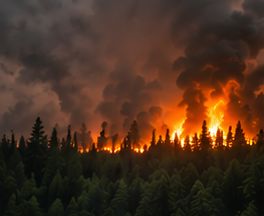
The National Fire Chiefs Council defines a wildfire as a vegetation fire that meets at least one of several criteria: it covers at least one hectare, has flames longer than 1.5 metres, needs four or more fire engines or other resources, needs crews for at least six hours, or seriously threatens life, property, infrastructure or the environment.
The NFCC says wildfires are starting earlier in the year and the season is lasting longer, driven by long spells of high temperatures, little rain, low humidity and strong wind. On 19 July 2022 a wildfire at Wennington in Greater London led to evacuations and destroyed 16 homes.
Preventing fires outdoors
Because most wildfires start with people, the most effective step is not starting one. Be Ready, the Countryside Code and the NFCC give the same core advice.
- Do not light fires in the countryside or open spaces, including parks, moorland and woodland
- Have barbecues only where signs say you can, and never leave a hot barbecue unattended
- Make sure a barbecue is fully out and the ashes are cold before you dispose of them
- Stub out cigarettes fully and never throw them from a vehicle
- Take all rubbish home, especially glass bottles, which can focus sunlight and start a fire
- Follow local signs, which may restrict access during high-risk periods
If you see a wildfire: call 999
Move to a safe place away from the fire first. Then call 999 straight away. Be Ready is explicit: do not assume someone else has already reported it.
Give the location as accurately as you can. Be Ready suggests the Ordnance Survey app or what3words. If you are asked to, wait at a safe agreed spot to give the fire service more details.
Do not try to put the fire out yourself, and do not travel to the area to look, which can slow down the emergency response. The Countryside Code also asks you to call 999 if you see an unattended fire.
Smoke at home and in the car
Wildfire smoke contains fine particles, carbon monoxide and other pollutants. UKHSA says the fine particles can reach deep into the lungs and even the bloodstream. Smoke can irritate the eyes, nose and throat and cause coughing, wheezing, breathlessness and chest pain. People with asthma, heart or lung disease, children, older adults and pregnant women are at greater risk.
If there is no danger from the fire itself, UKHSA's most effective advice is to stay indoors with windows and doors closed, even in an older, draughty home. Turn off air conditioning that draws in outside air and limit time outdoors. Open windows again only when it is safe, because smoke can return quickly.
In a car, keep the windows up, close the vents and set the air to recirculate. UKHSA says surgical masks are not usually recommended, as they do not protect against all the pollutants in smoke. Do not sweep up ash, which can irritate the airways; wash it away with water. If you have asthma, follow your action plan and keep your inhalers within reach. Most symptoms pass once you are away from the smoke; seek health advice if they persist or get worse.
Preparing to evacuate
Always follow the advice of the emergency services and your council, whether that is to leave or to stay indoors. Be Ready warns that wildfires can spread quickly in warm, dry weather, which can leave little time to pack, so keep a grab bag ready.
Know more than one route out, and plan for pets. What to take, how to leave your home and how to let people know where you are is covered in our evacuation checklist.
Holidays in wildfire regions
Before travelling, check the FCDO travel advice for your destination, sign up for its email alerts and note the local emergency number. Check that your travel insurance is suitable. Be Ready also gives the FCDO's 24-hour number for British people affected by an emergency abroad: +44 (0)20 7008 5000.
The FCDO's guidance on natural hazards abroad says that in some countries causing a forest fire can be a crime even if it was an accident. If you see a fire, move away from it and call the local emergency services immediately. Do not fight it or travel towards it, and follow the local authorities, including any order to evacuate or to stay indoors with the windows closed.
If you are trapped, the FCDO advises heading for water nearby if you can, or lying flat in a cleared area, covering yourself with soil and breathing the air close to the ground.
Frequently asked questions
What should I do if I see a wildfire in the UK?
Move to safety, call 999 and do not assume someone else has. Give the location as precisely as you can, for example with the Ordnance Survey app or what3words.
Are barbecues allowed on moorland or in parks?
Only where signs say you can. The Countryside Code and Be Ready advise against lighting fires in the countryside and open spaces, and never leaving a barbecue unattended.
Does a face mask protect against wildfire smoke?
UKHSA says surgical masks are not usually recommended because they do not protect against all the pollutants in smoke. Staying indoors with windows and doors closed is more effective.
What causes most wildfires in the UK?
Human activity. The NFCC lists discarded cigarettes and glass, unattended or badly extinguished barbecues and campfires, deliberate fire-setting and controlled burns that get out of hand.
What should I do about wildfires on holiday?
Check FCDO travel advice, note the local emergency number and follow local authorities. In some countries causing a forest fire by accident can be a crime.
Sources
- GOV.UK Be Ready – Wildfires
- UKHSA blog – Why severe wildfires are becoming more frequent in the UK and how to cope with the health risks
- National Fire Chiefs Council – Wildfire
- Natural England – The Countryside Code
- FCDO – Extreme weather and natural hazards
- GOV.UK Be Ready – Overseas emergencies
This page summarises the advice of the organisations named. In an emergency, follow the instructions of your local authorities.
Contains public sector information licensed under the Open Government Licence v3.0.