
Guides
What to do in an earthquake
Strong earthquakes are rare in the UK, but they are a real risk in many places British travellers visit. The right response is the same everywhere and takes seconds: drop, cover and hold on. This guide explains what to do during and after the shaking, using advice from the UK Foreign, Commonwealth and Development Office, the British Geological Survey and earthquake safety programmes in the United States.
Updated:
CryMap is an emergency preparedness app for households that also works without a signal. Checklists for the most common emergencies are in CryMap too, offline and sized for your household. Get it for free
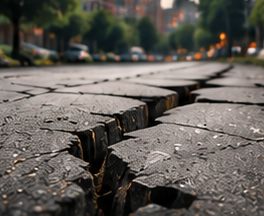
Drop, Cover, Hold On
The FCDO, Ready.gov and the ShakeOut earthquake drills all give the same three steps. Do them as soon as you feel shaking.
- Drop onto your hands and knees where you are, so the shaking cannot knock you over
- Cover your head and neck with one arm and hand; crawl under a sturdy table or desk if one is close, otherwise get next to an inside wall away from windows
- Hold on until the shaking stops; under a table, hold it with one hand and be ready to move with it
Indoors: stay put
If you are inside, stay inside. ShakeOut explains that running out is dangerous because the ground is moving and glass and debris may be falling from buildings.
Do not stand in a doorway. ShakeOut says the idea comes from old photos of collapsed adobe houses. In modern buildings doorways are no stronger than other parts of the house and do not protect you from falling or flying objects. ShakeOut also warns against the so-called triangle of life, which experts have discredited.
Lying in bed? Turn onto your front and protect your head and neck with a pillow.
If you cannot get down
If you use a wheelchair, lock the wheels. Then bend forward and cover your head and neck with your arms, a book or a pillow, and hold on until the shaking stops. If you use a walker, get as low as you safely can before covering your head and neck. This is the version of the advice given by Ready.gov and ShakeOut.
Outdoors, in a car, near the coast
Outdoors, stay outside and move to open ground away from buildings, trees, streetlights and power lines, then drop and cover.
In a car, pull over somewhere safe away from buildings, power lines and trees, set the handbrake and stay in the vehicle until the shaking stops.
Near the sea, a strong earthquake can cause a tsunami. The FCDO advises moving inland or to high ground immediately, without waiting for an official warning. A sudden rise or fall in sea level, or the sea pulling back fast from the shore, are warning signs.
After the shaking: aftershocks and hazards
Expect aftershocks. The FCDO says they can continue for weeks or months and sometimes cause damage. Each time, drop, cover and hold on again.
Check for hazards such as damaged buildings, gas or water leaks and fallen power lines. Leave a damaged building and do not go back in. If you are trapped, Ready.gov suggests texting, banging on a pipe or wall or using a whistle rather than shouting. Texts may get through when calls do not, and they use less battery.
Follow local advice on evacuating or sheltering. Avoid floodwater, which can contain chemicals, sewage and debris.
Preparing your home
Ready.gov advises securing heavy items such as bookcases, fridges, water heaters and televisions, along with anything hanging on the walls. Store heavy and breakable objects on low shelves.
A home emergency kit and a grab bag help after any disaster, including an earthquake. Our guides to the 72-hour kit and the go bag set out what to keep.
Earthquakes in the UK: the real risk
The British Geological Survey detects and locates 200 to 300 earthquakes in the UK each year, of which 20 to 30 are felt by people. A magnitude 4 earthquake happens roughly every two years and a magnitude 5 roughly every 10 to 20 years. As of mid-December 2025, BGS had recorded 309 that year; the largest was a magnitude 3.7 near Loch Lyon in Perth and Kinross on 20 October 2025.
The largest known UK earthquake, magnitude 6.1, struck near Dogger Bank in 1931, about 60 miles offshore, and caused minor damage on the east coast of England. The most damaging was near Colchester in 1884, when about 1,200 buildings needed repairs. BGS research suggests the largest possible UK earthquake is around magnitude 6.5. BGS collects reports from people who feel an earthquake and received 1,320 of them in 2025.
Travelling to earthquake regions
Before you go, check the FCDO travel advice for your destination, sign up for its email alerts, note the local emergency number and make sure your travel insurance is suitable. The FCDO also suggests learning the local warning systems and where shelters are. Be Ready lists the FCDO's 24-hour number for British people affected by an emergency abroad: +44 (0)20 7008 5000. Keep your passport and key documents up to date and to hand.
Frequently asked questions
Should I stand in a doorway during an earthquake?
No. ShakeOut says doorways in modern buildings are no safer than anywhere else and do not protect you from falling objects. Drop, cover and hold on instead.
Should I run outside when an earthquake starts?
No. Stay inside and take cover. Running out puts you at risk from falling glass and debris, and you can fall while the ground is moving.
Are there earthquakes in the UK?
Yes. BGS detects 200 to 300 a year, and 20 to 30 are felt. A magnitude 4 happens roughly every two years, but damaging earthquakes are rare.
What was the biggest earthquake in the UK?
A magnitude 6.1 earthquake near Dogger Bank in 1931, about 60 miles offshore. The most damaging was near Colchester in 1884.
What should I do after an earthquake near the coast?
Move inland or to high ground straight away. The FCDO says not to wait for an official tsunami warning.
Sources
- FCDO – Extreme weather and natural hazards
- British Geological Survey – Where do earthquakes occur
- British Geological Survey – Perth and Kinross tops the UK's earthquake activity charts for 2025
- ShakeOut – Drop, Cover, and Hold On
- Ready.gov – Earthquakes
- GOV.UK Be Ready – Overseas emergencies
This page summarises the advice of the organisations named. In an emergency, follow the instructions of your local authorities.
Contains public sector information licensed under the Open Government Licence v3.0.