
Guides
What to do in a nuclear or radiation emergency
If there is a radiation emergency, the official advice for the public is simple: go indoors, stay there and follow official updates. Radiation cannot be seen, heard, smelt, tasted or felt, so follow the advice even if nothing seems to have happened. This guide sets out what the UK Health Security Agency and the government's Be Ready campaign advise, with US guidance on nuclear explosions as a second source.
Updated:
CryMap is an emergency preparedness app for households that also works without a signal. Checklists for the most common emergencies are in CryMap too, offline and sized for your household. Get it for free
Accidents and attacks: different situations
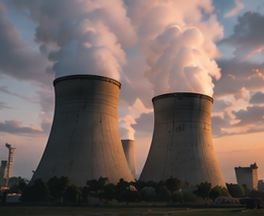
UKHSA's public guidance covers emergencies such as an incident at a nuclear power station or during the transport of radioactive material. It says the most affected areas would generally be within a few miles of the site, although wind can carry material further. If the emergency is overseas, UKHSA says it is very unlikely that people in the UK will need to do anything differently.
UK public guidance does not set out separate steps for a nuclear explosion. The US government's Ready.gov uses the same principle, get inside, stay inside and stay tuned, and says people would have 10 minutes or more to reach shelter before fallout arrives. If you are outside when a detonation happens, it advises taking cover behind anything that offers protection, lying face down to protect exposed skin from heat and debris, and getting into the nearest building once the blast wave has passed.
Go in: the first minutes
Get indoors as soon as possible, into the nearest building. Do not travel home to shelter there. UKHSA says vehicles and tents do not give enough protection, but you should not take unnecessary risks to reach a building.
Close the doors and windows behind you. If you were outside near the emergency, take off your outer clothing as soon as you are in. UKHSA says this alone can remove about 90% of radioactive contamination.
Stay in: where in a building
Buildings made of brick, stone or concrete give the best protection. UKHSA advises staying towards the middle of the building, away from external doors, windows and walls. Ready.gov names a basement or the centre of a large building and suggests putting as many walls as possible between you and the outside.
Turn off fans and air conditioning, close external doors and windows, and close vents, including trickle vents. Bring outdoor pets inside. Do not go out to collect children from school or nursery, because staff will keep them inside until it is safe. If you take regular medication, contact NHS 111 rather than leaving the building.
How long to shelter
UKHSA says to expect to stay indoors for about one to two days, possibly longer if the release continues. Ready.gov says sheltering after a nuclear explosion usually lasts at least 24 hours. Both say to stay until the authorities tell you otherwise.
Do not leave to evacuate unless you are advised to, because leaving shelter can increase your exposure. If the authorities do order an evacuation, follow their instructions. You may be checked for contamination or asked to clean yourself before going to a rest centre, and you should not return until you are told it is safe.
Tune in: getting official information
Follow official advice on GOV.UK and news from radio, TV, the internet, social media or the police. A battery or wind-up radio keeps you informed if the power or mobile network fails. For a threat to life, the authorities can also send an Emergency Alert to phones in the area.
Decontaminating yourself
UKHSA's self-decontamination guidance sets out the steps once you are indoors.
- Limit your movement and contact with others until you have cleaned yourself
- Take off outer clothes and shoes; cut clothing off rather than pulling it over your head
- Seal the clothes in a plastic bag and put it away from people
- Shower with warm water, soap and shampoo, keeping your eyes and mouth closed
- Do not use conditioner, which can bind contamination to your hair, and do not scrub your skin or wounds
- If you cannot shower, wash at a sink, or wipe exposed skin with a damp cloth outwards from your nose and mouth, then blow your nose
- Put on clean clothes that were stored indoors
- Wash pets with soap or shampoo and water, wearing gloves and a mask if you can
Food, water and iodine tablets
UKHSA says food and tap water already indoors are safe. Mains tap water is considered safe unless you are told otherwise, and the mains system holds about two to three days' supply of treated water. Private supplies, rainwater and food grown or stored outdoors may be contaminated and will get separate advice. Ready.gov adds not to eat garden produce or uncovered food that was outdoors until the authorities say it is safe.
For incidents at nuclear reactors, the authorities may advise people within a set distance to take stable iodine tablets. Take them only when you are officially told to, and only the tablets provided for the purpose. Iodised salt is not a substitute. Our potassium iodide guide explains what the tablets do and do not do.
Plans around UK nuclear sites
Under the Radiation (Emergency Preparedness and Public Information) Regulations 2019, local authorities must prepare off-site emergency plans for nuclear sites with the operator and other agencies, and test them every three years. The Office for Nuclear Regulation assesses whether these plans are adequate.
Around sites that need one, the plan covers a Detailed Emergency Planning Zone set in advance. People living in it must receive information beforehand about radiation, the protective action planned, which authorities are responsible and the extent of the zone. If you live near a nuclear site, UKHSA points to your local authority's guidance for the local arrangements.
Frequently asked questions
What is the most important thing to do in a radiation emergency?
Get inside the nearest solid building, close doors and windows and stay there. UKHSA's message is go in, stay in, tune in.
How long should I stay inside?
UKHSA says to expect one to two days, possibly longer. Ready.gov says at least 24 hours after a nuclear explosion. Stay until the authorities say otherwise.
Is tap water safe after a nuclear accident?
UKHSA says mains tap water is considered safe unless you are told otherwise, and food already indoors is safe to eat.
Should I take iodine tablets?
Only if the authorities tell you to. They protect only the thyroid against radioactive iodine and are relevant mainly to reactor accidents.
Is the CryMap simulation a forecast?
No. It is an educational model to help you understand effects. It does not predict events or replace official warnings.
Sources
- UKHSA – What to do in a radiation emergency
- UKHSA – How to remove radioactive material from your skin and clothes
- GOV.UK Be Ready – Hazardous substance and radiation exposure
- UKHSA – Nuclear emergencies: information for the public
- Office for Nuclear Regulation – Local emergency arrangements
- Ready.gov – Nuclear explosion
This page summarises the advice of the organisations named. In an emergency, follow the instructions of your local authorities.
Contains public sector information licensed under the Open Government Licence v3.0.